Dear Abe,
Thursday, January 16, 2014
Dear Abe, I Have Just Been Appointed the Project Manager of My Group, Help!
Dear Abe,
Wednesday, July 17, 2013
Popularize Mind Mapping One Student or Classroom at a Time
I talked with one of the academic/career advisors at Boise State University today. It turns out that they have someone on staff who's in charge of putting together academic skills training programs for students. These programs help improve study habits, note taking, research organization, and writing.
I haven't been able to talk to this other staff person, but I know two things that I want to talk to them about:
- Do you teach mind mapping to students? If so, what do you teach them to do?
- If you don't, can I come in and teach a class or two?
How About You?
I'm sure BSU isn't unique in offering these classes to student. What would it take for you to contact the nearest community college, vocational/technical college, or university and ask them if you could teach a class?
I run into some many parents whose children have learning problems. Few of these parents have heard of mind mapping or how it can help kids with dyslexia, who struggle with reading comprehension, or who have a hard time organizing writing assignments. I've gone into local schools and taught classes to 5th graders, and have gotten a good reception from students and teachers alike.
You may not think you're a mind mapping expert. But I bet you have all the skills you need to show students of all ages how to become more productive and less frustrated.
Monday, July 15, 2013
New Process Modeling Tools Now Available at ConceptDraw
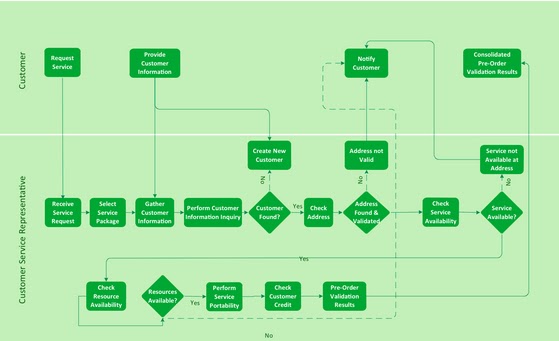
Well, if you think it's time your organization did the same, you might be interested in a new CD PRO solution: Cross Functional Flowcharts.
Here are a couple examples of the kinds of charts you can create:
Process Improvement
This example shows a business process diagram that can be then analyzed for ways to improve the process effectiveness and diagnose quality issues that require resolution:
ESL Communications
The next example shows a workflow for replacing engine oil. It explains all the steps clearly and visually:
Diagrams like this can be used for training. And with our increasingly multicultural work force, visual images like this can help communicate processes to people for whom English is a second language (ESL).
Vector Graphics
The Cross Functional Flowchart solution extends ConceptDraw PRO v.9 software with templates, samples, and a library of vector shapes for drawing the flowcharts. The charts can help you visualize and communicate the operations of a business process flow step-by-step, with the responsible people or departments for each operation clearly indicated.
All source documents are vector graphic documents. They're available for reviewing, modifying, or converting to a variety of formats (PDF file, MS PowerPoint, MS Visio XML, and many other graphic formats) from the Template Gallery of ConceptDraw PRO. You must have the Cross-Functional Flowcharts solution installed to access these documents.
Wednesday, June 12, 2013
Does the NSA Use Mind Mapping?
The scenario I mentioned in yesterday's post about data and the meaning of data relates to recent news surrounding the NSA. This secretive federal agency has been embroiled lately in news about its collection of massive amounts of data American citizens generate through the use of the Internet.
A Double-Edged Sword
The person who leaked news of this collection, a private contractor named Edward Snowden, is being proclaimed a hero and a villain. Clearly, there were other avenues open to him if he wanted this information to become public.
But the idea of the government collecting unimaginable amounts of data on what are considered the private activities of millions of people, without them/us knowing about it... that's plenty troubling too.
How Do You Personally Define Freedom? Freedom from what?
From what I understand, the government's plan is to continually amass data, and then to comb it with ever-more-powerful, intelligent tools. The goal: Discover as soon as possible those sharp needles in the haystack: (Read the new WIRED story about this.)
I get the part about data visualization. We need tools to compress this information into forms we can understand. But then there is the next step: Drawing conclusions and taking actions based on that data.
I personally wonder what tools the NSA uses to take this second step. We know that mind mapping is used for some very key projects at some very large organizations, both public and private.
And I remember those strong rumors that a federal intelligence agency bought a number of mind mapping software licenses the day after 9/11. We will never know the tools being used in the most secretive of secret places.
Is Data Synonymous with Truth?
So many resources are dedicated these days to developing the technology that supports the first part (data viz). But how far have we come to help people draw the right conclusions from the data?
Our belief in -- or at least our reliance on -- Big Data will only grow as we use it to make more and more decisions. Will we get better at developing tools to help us make sense of it all?
Tuesday, June 11, 2013
Thanks, Marissa Mayer

Long time since last post... oh well. Blogging should be about posting when you have something to say, not because you need to put something up X times per X.
This reminds me of a time when I was hiking in the Enchanted Valley in the Olympics (WA state). We ran into a guy who was sitting in the middle of a soggy depression, staring at a thicket of devil's clubs (nasty plant!!). When we suggested to him that there was a great view just around the bend, he said, "No, I stop to rest every half hour. It doesn't matter where I am." But I digress... Back to Marissa.
It suddenly dawned on me today that mind mapping adherents owe her one for her whole no-more-telecommuting thing. I say that after a couple of hours spent searching with terms like "information visualization," "Idea visualization" and so on. The two results come together in a sentence like:
Use data viz to make sense of the data, and then come together with others and use your new-found insight to make a decision or reach a conclusion.
The thrust of her argument I think is that it is in those serendipitous meetings in the hallways that new ideas are born. I can agree with that--as long as people feel like they have the time and chat for a minute, and as long as they aren't worried about "owning" any idea that might spring forth.
I work from home now and sometimes miss that serendipity. I get it now when I visit my clients and at the organizations I volunteer for. It's one of the most entertaining and affirming parts of the work day.
Thursday, May 9, 2013
Lawyers: Help Startups Make Good Decisions
Case's work falls into three main categories: corporate expansion, international law, and business startups. While each category is unique, they all have one thing in common: Success depends on his clients fully understanding the choices before them and the implications of the choices they make.
“By using MINDMAP or PRO," Case says, "I can create a visual document that shows them where they are now, where they’re trying to get to, and the decisions they’ll most likely have to make on the way. What’s so great about these programs is that they make it easy for me to show them the most likely implications of each decision. That makes for a much more informed client—one who is able to make better decisions.”
Case says he works with startup clients to, for example, brainstorm around the things they’ve looked at to confirm their market analysis—the size of the market, their opportunity, who their ideal customer is, how their product of service is different from competitors. He talks to them about their intellectual property, what they’re trying to create, when they will need money, and how much they’ll need.
“I can capture all this information from them in real time, drill down into each one as much as we need to, organize it all into a logical structure, and then use it to build the story they’ll present to investors. It’s an incredibly efficient, thorough process.”
Monday, April 29, 2013
Free Upgrades to ConceptDraw PRO
ConceptDraw PRO 9.4 features an enhanced startup wizard, new connectors technology and ConceptDraw Solution Park additions to help users produce professional results more quickly, easily and cost effectively. The upgraded ConceptDraw PRO package demonstrates CS Odessa’s ongoing commitment to continuously improving its solutions suite.
Improvements include:
- A new Start Up Wizard that allows users to set basic formatting features.
- Arrows 10 technology to streamline object linking.
- New Solution Park enhancements, including new templates and libraries to help users quickly and efficiently produce professional results.
"The new startup wizard can help users begin each new project more efficiently and effectively," says Olin Reams, General Manager, VP of Sales & Marketing Americas at CS Odessa. "Smart Connectors technology enhances the intelligent design of the product since it fits the way people think instead of program operations."